


Decision Intelligence
By
Paula Den
NADA 2026 confirmed something uncomfortable.
The industry is not struggling with innovation. It is struggling with consistency.
AI was everywhere.
Across booths, demos, and educational sessions, automation and AI-enabled workflows dominated the conversation. Industry coverage noted more than 20 sessions focused on AI, automation, and workflow intelligence. Dealers are no longer asking whether AI works.
They are asking where it delivers operational control.
And despite the density of tools on display, one layer was difficult to find.
A decision layer that connects it all.
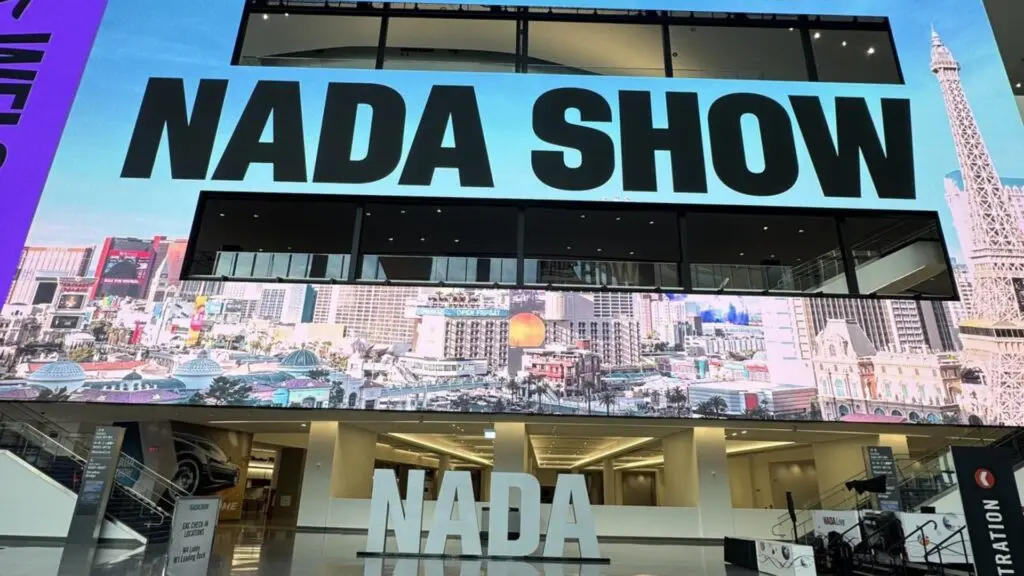
NADA 2026 did not feel like a technology debut stage.
It felt like an execution audit.
Used car inventory volatility remains real. Floorplan pressure continues to shape capital decisions. Pricing accuracy has become more critical as margins normalize. Connect rates and BDC performance still influence revenue outcomes. Reconditioning delays still affect speed to market.
The conversation has shifted from feature capability to operational reliability.
Technology adoption has accelerated.
Operational cohesion has not.
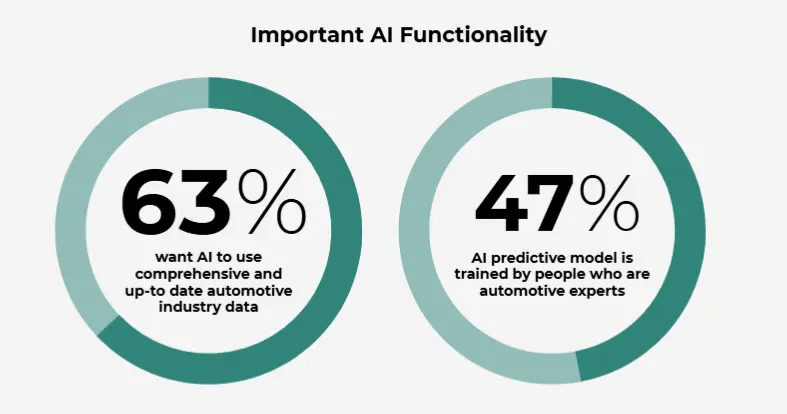
Dealerships do not have a data problem.
They have a consistency problem.
The same VIN can produce different appraisal outcomes depending on who evaluates it. The same condition grading framework can produce different reconditioning estimates across rooftops. The same pricing engine can generate different decisions under time pressure. The same lead can receive inconsistent follow-up.
At scale, variability becomes financial risk.
Subjectivity, multiplied across thousands of transactions, erodes margin and trust.
This is not a shortage of intelligence.
It is a shortage of standardization.
Modern dealerships often operate with:
Each tool solves a narrow problem.
Few unify the decision logic across the workflow.
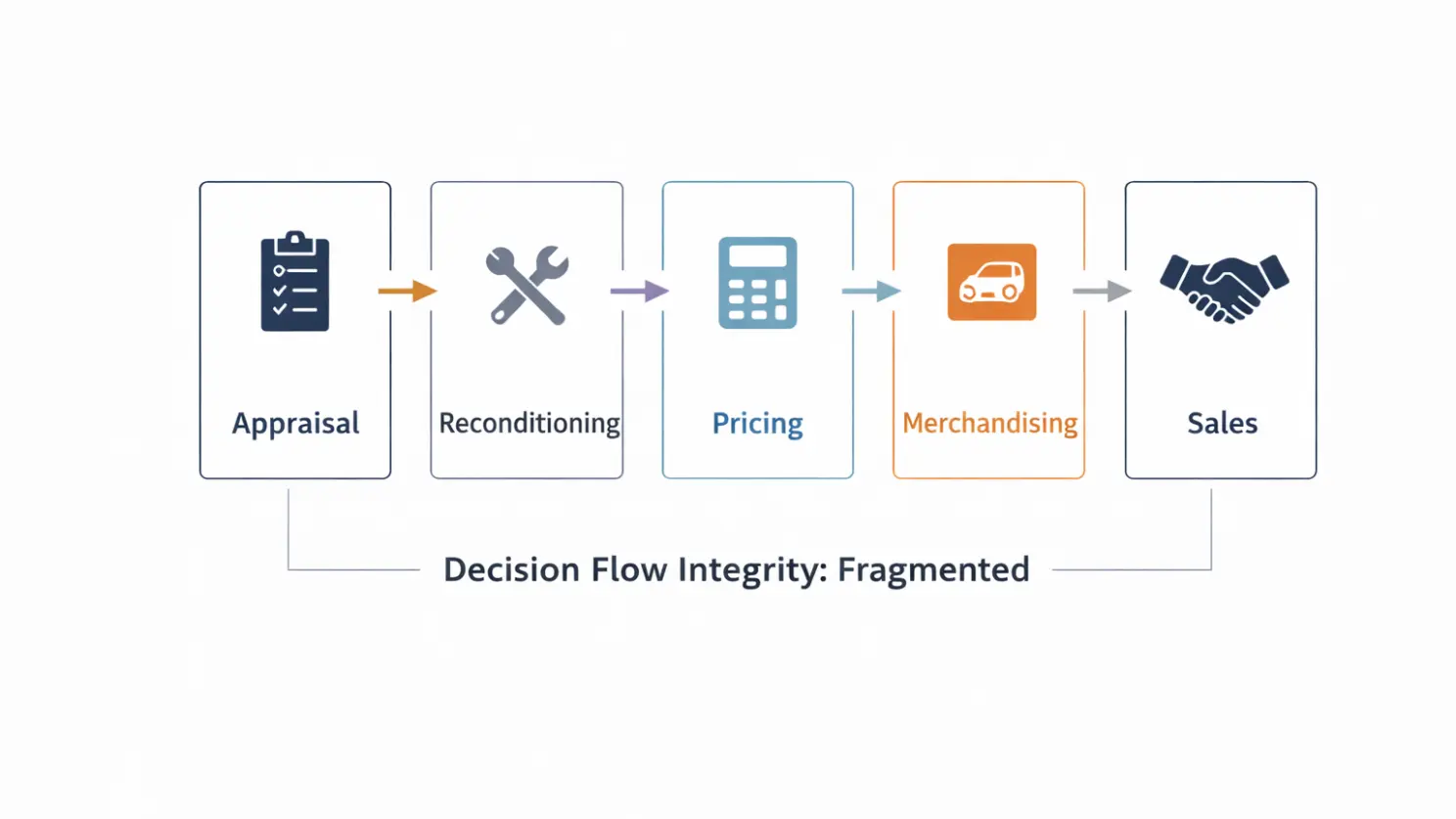
Data fragmentation persists. Handoffs increase. Outputs require reinterpretation at every stage.
Technology density increased.
Decision cohesion did not.
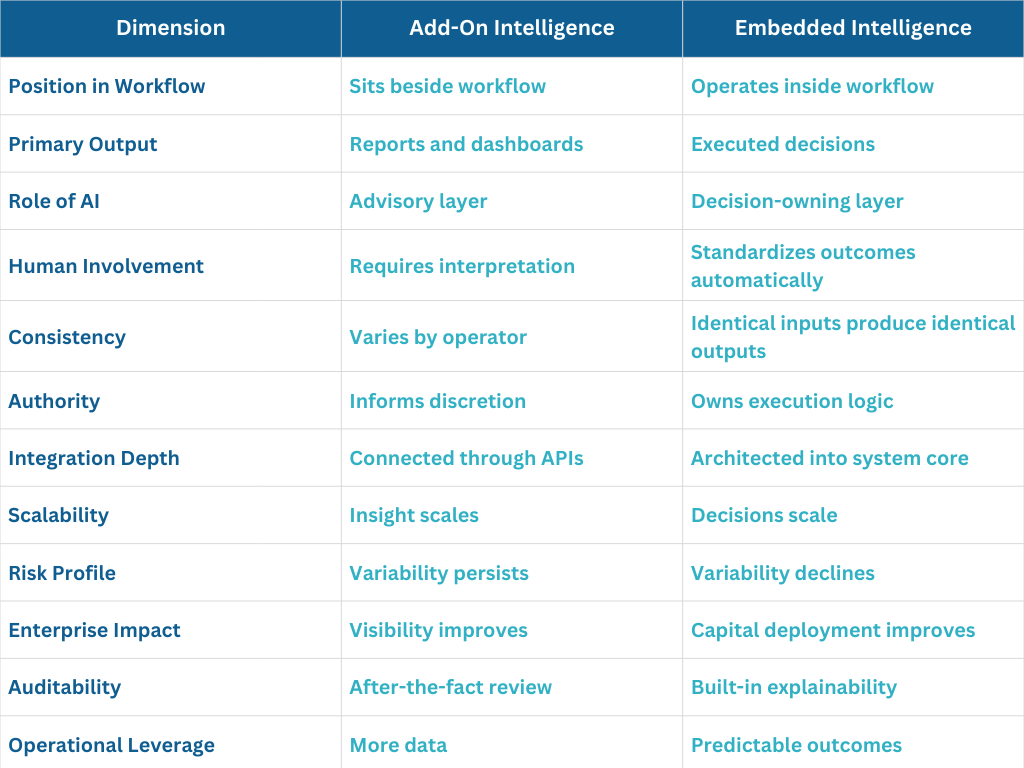
The difference is not technical. It is architectural.
In dealership operations, the leverage point is not insight. It is execution authority.
When identical inputs produce identical outputs, variability declines. When variability declines, predictability increases.
Predictability is operational leverage.
Two inspectors grading the same vehicle differently is not cosmetic.
Inconsistent reconditioning estimates affect cost structure. Pricing swings across rooftops distort margin control. Delayed decisions slow inventory turn.
Variability affects:
In an environment already shaped by valuation volatility, additional internal inconsistency compounds risk.
VIN-specific insights and condition grading tools help only when standardized.
Without standardization, intelligence fragments.
Fragmented intelligence behaves like noise.
NADA featured solutions for marketing. Solutions for phones. Solutions for pricing. Solutions for service. Solutions for inventory photos. Solutions for chat and lead response.
What was harder to find was a unified decision layer connecting appraisal to reconditioning to pricing to merchandising in a single, verifiable flow.
Not shared data but shared decisions.
A system where identical inputs produce identical outputs where explainability and auditability are built into execution rather than layered on afterward.
Decision infrastructure, not another tool.
Industry coverage described the tone clearly. The industry has moved past experimenting with AI and toward disciplined execution.
AI is no longer the advantage. Integration is.
Adoption is no longer the moat. Consistency is.
The next phase of competition will reward operators who reduce subjectivity, standardize appraisal decisions, and embed intelligence across workflow stages.
As AI becomes baseline, variability will become less acceptable.
Multi-rooftop groups will demand tighter standardization. Capital allocation decisions will require stronger audit trails. Operational performance will be measured by outcome consistency.
The next decade in automotive retail will not be won by the loudest innovator.
It will be won by the most consistent operator.
And consistency does not come from more tools.
It comes from a decision layer that connects them.